
The saree is one of India’s most cherished and iconic garments, a drape of elegance that transcends generations. For centuries, this six to nine-yard fabric has been woven with intricate patterns, dyed with vibrant colors, and crafted with diverse silk types. Each region in India has its own unique style, weaving techniques, and cultural significance associated with sarees. From the Banarasi sarees of Uttar Pradesh to the Kanjeevaram silk sarees of Tamil Nadu, let’s explore the traditional patterns, types of silk, and the regional origins of some of India’s most famous sarees.
—
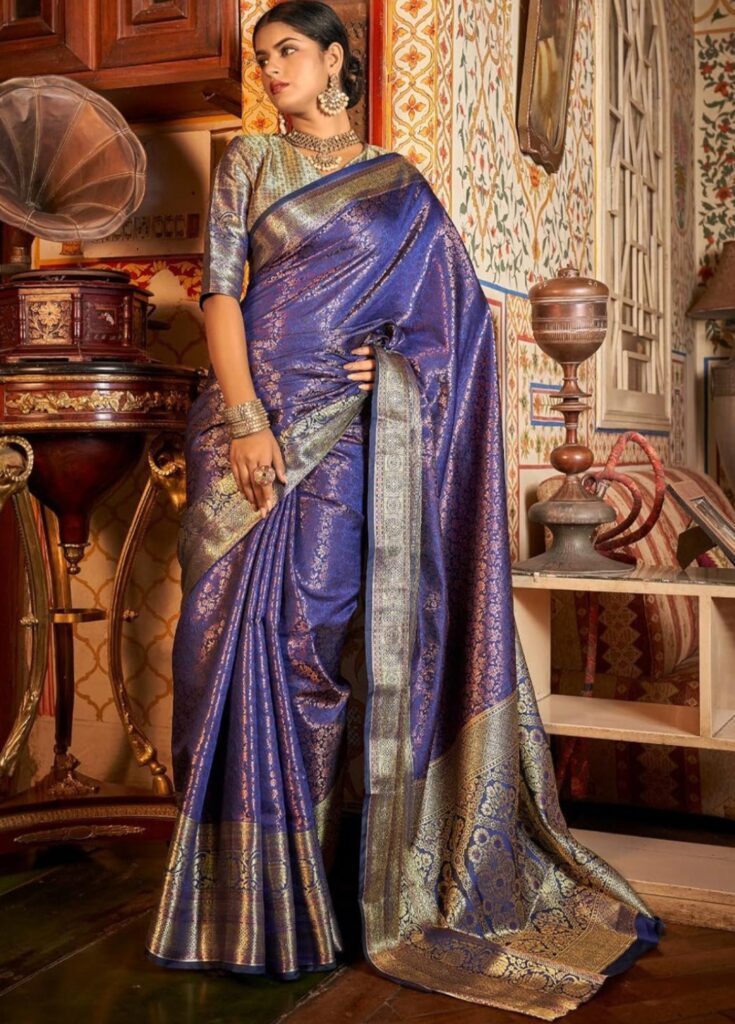
1. Banarasi Silk Sarees (Uttar Pradesh)
Pattern & Design: Banarasi sarees are renowned for their intricate brocade work, often with gold or silver zari (metallic thread). Patterns often include Mughal-inspired floral motifs, foliate designs, and intricate jhallar borders. The fabric is decorated with delicate embroidery work, and its patterns often depict scenes of mythology or floral and foliate motifs.
Silk Type: Pure silk, satin, or organza, often mixed with zari threads.
Region: Originating from Varanasi (Banaras), Uttar Pradesh, these sarees have been famous since Mughal times, especially for their luxurious appearance and intricate patterns. They are a popular choice for weddings and special occasions.
—
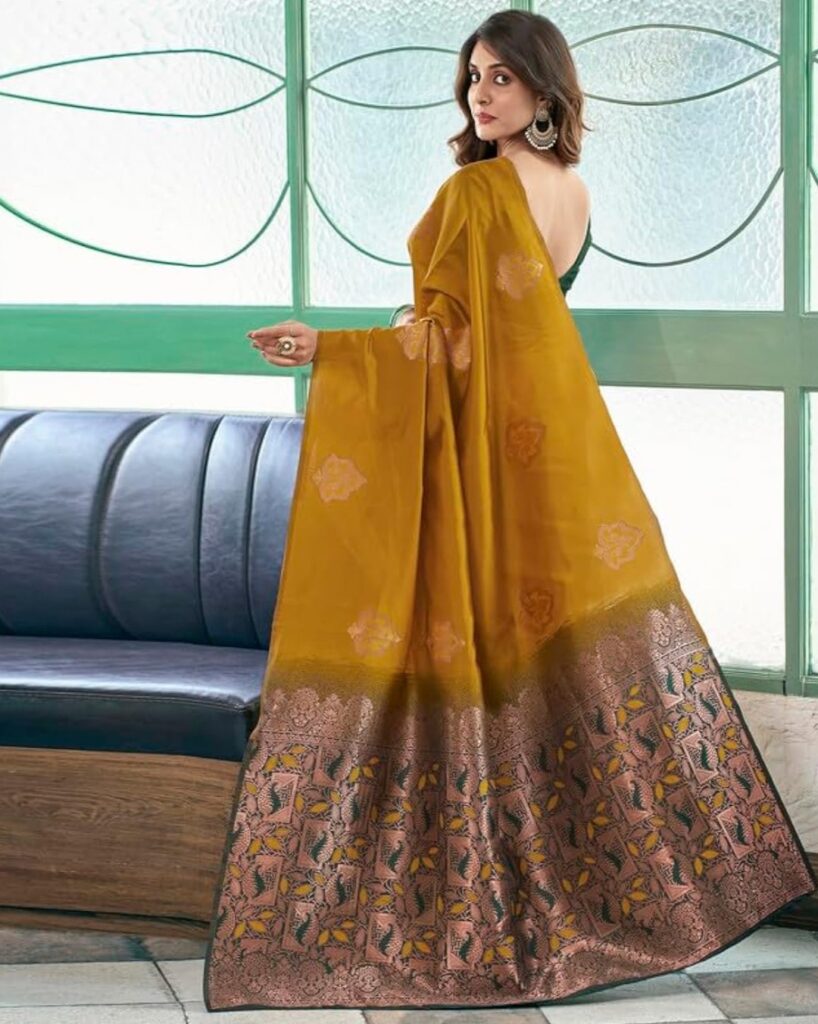
2. Kanjeevaram Silk Sarees (Tamil Nadu)
Pattern & Design: Known for their vivid colors, contrasting borders, and lustrous shine, Kanjeevaram sarees showcase motifs inspired by temples, peacocks, and traditional mythology. Borders often contrast with the body and may include stripes, checks, or floral designs.
Silk Type: Made from high-quality mulberry silk threads, giving the saree its durability and heavy feel. The zari used in Kanjeevaram sarees is usually of high purity, enhancing the saree’s value.
Region: The city of Kanchipuram in Tamil Nadu is famous for producing these sarees, which are highly prized across India for their richness and tradition. They’re often worn by brides in South India.
—
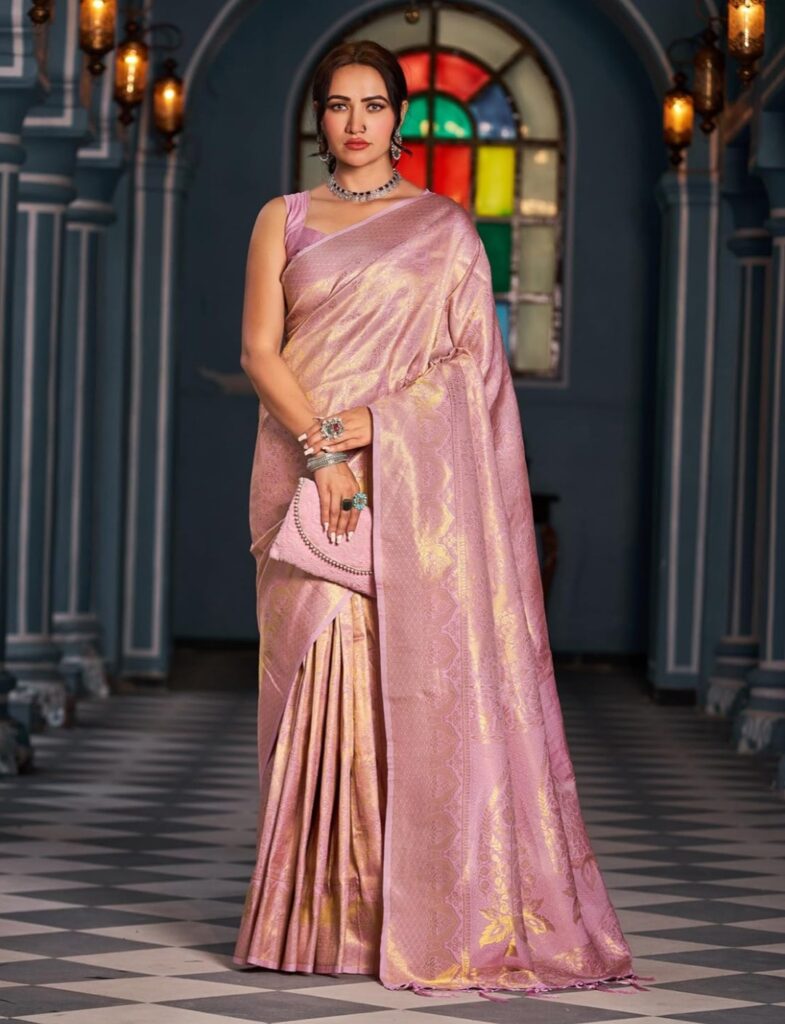
3. Paithani Silk Sarees (Maharashtra)
Pattern & Design: Paithani sarees have a distinct style, with motifs like parrots, lotus flowers, and peacocks. The pallus (the loose end) often features intricate zari work with bright color combinations and mirror or tapestry-like designs.
Silk Type: Pure silk with rich gold zari, making it heavy and luxurious.
Region: Originating from Paithan in Maharashtra, Paithani sarees are considered royal and are an important part of Maharashtra’s cultural heritage. They are typically passed down as family heirlooms.
—
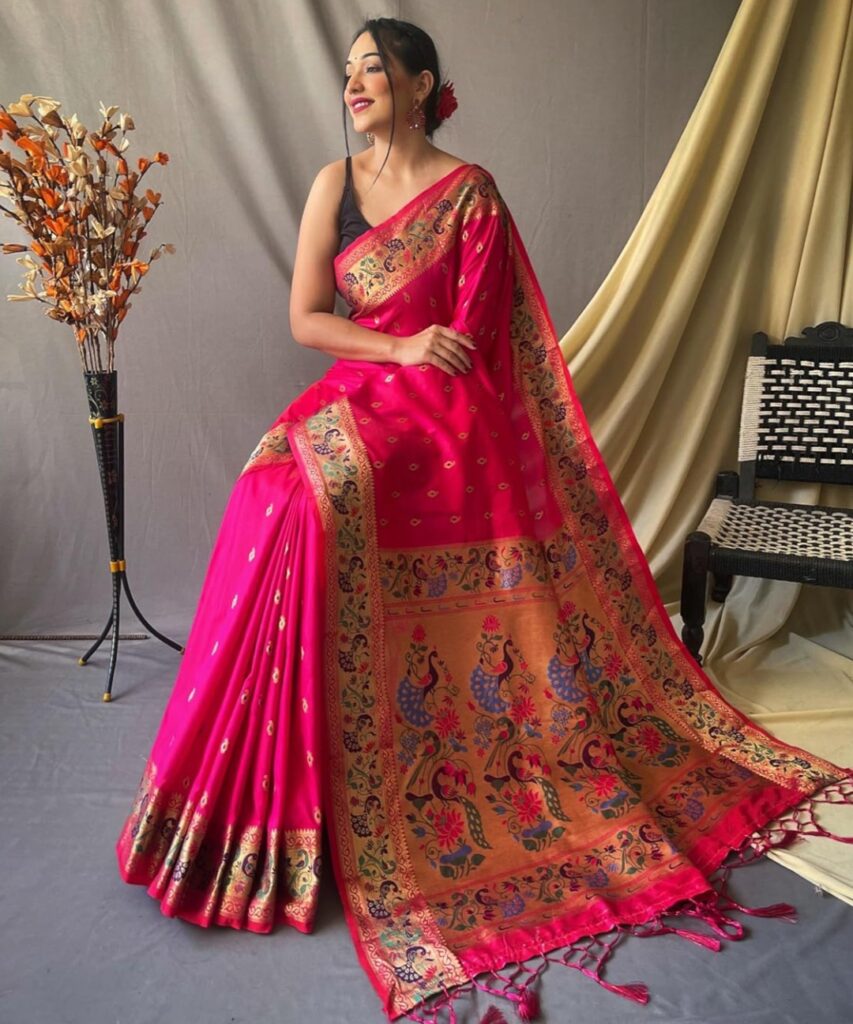
4. Baluchari Silk Sarees (West Bengal)
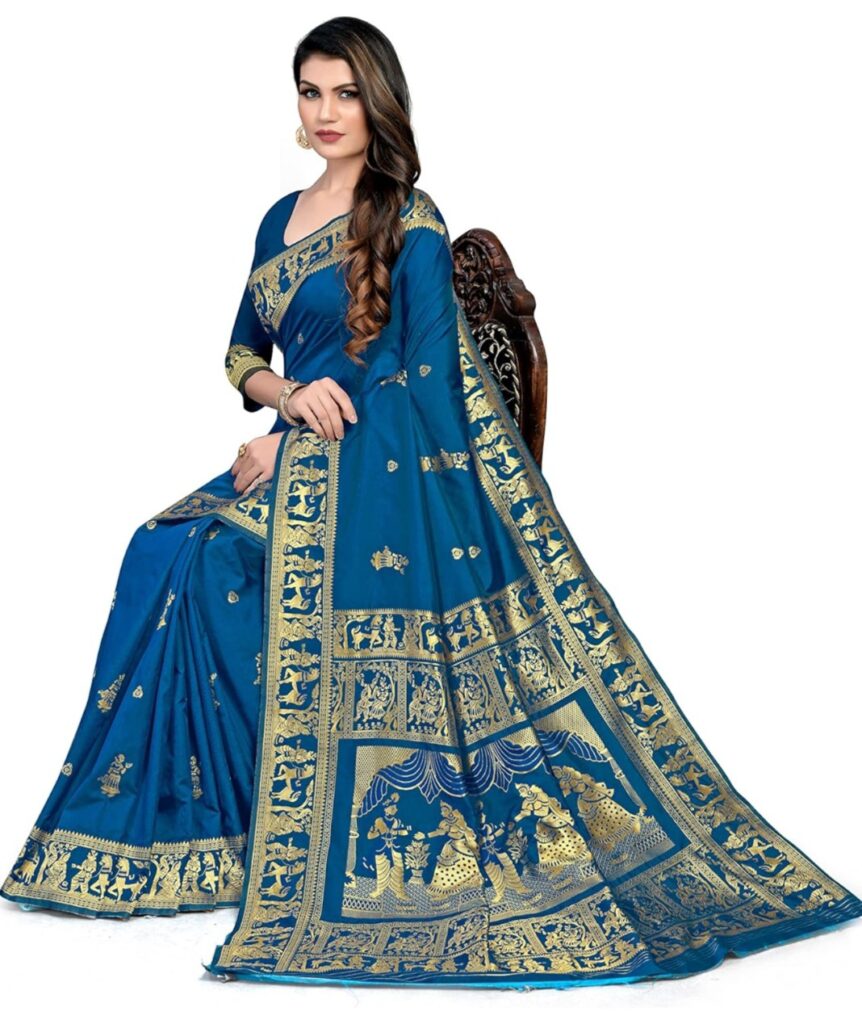
Pattern & Design: Baluchari sarees are known for their storytelling through designs. The pallus are often decorated with mythological scenes and patterns depicting epics like the Mahabharata and Ramayana, making each saree unique in its own way.
Silk Type: Baluchari sarees are woven from fine silk threads, giving them a smooth and soft texture.
Region: These sarees originate from Bishnupur in West Bengal. They are highly artistic and are a testament to the rich craftsmanship of Bengal weavers.
—
5. Patola Silk Sarees (Gujarat)
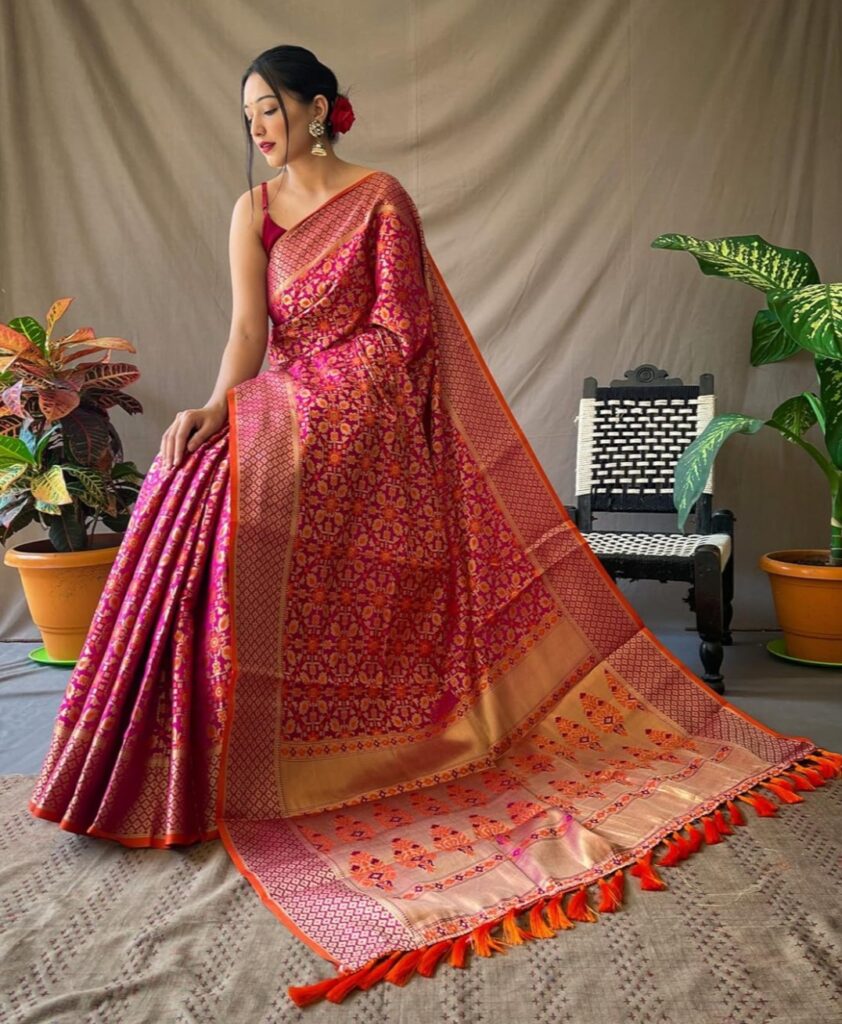
Pattern & Design: Patola sarees are created using a double ikat weaving technique that requires precision. The patterns often include geometrical designs, and the colors are derived from natural dyes. Common motifs include flowers, animals, and religious symbols.
Silk Type: These sarees are woven from high-quality silk, which is then dyed using the resist-dye technique.
Region: Originating from Patan in Gujarat, Patola sarees are highly prized for their vibrant colors and precise patterns. They are considered symbols of wealth and luxury.
—
6. Muga Silk Sarees (Assam)
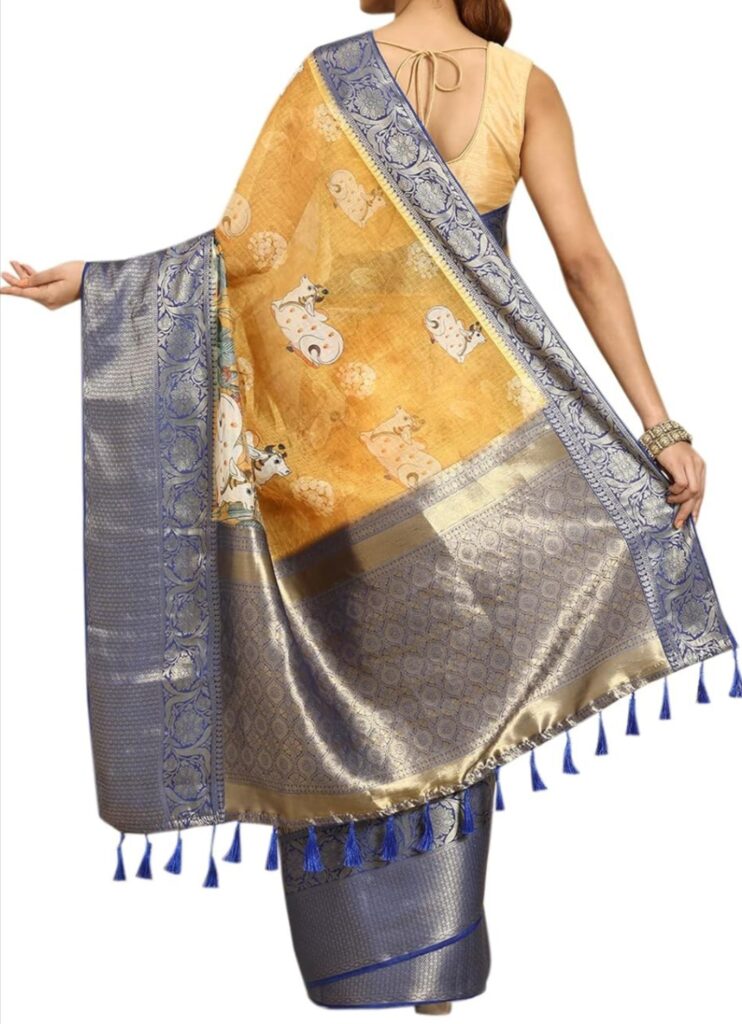
Pattern & Design: Muga silk sarees are unique for their golden-yellow color, which is a natural feature of Muga silk. These sarees often feature motifs inspired by nature, including plants, flowers, and animals, with a refined and minimalistic style.
Silk Type: Muga silk, exclusive to Assam, is one of the rarest and most durable silks in the world. It becomes shinier with each wash, making it unique.
Region: Assam is the sole producer of Muga silk sarees. They are highly valued for their rarity and natural sheen, and they hold significant cultural importance in Assamese society.
—
7. Chanderi Silk Sarees (Madhya Pradesh)
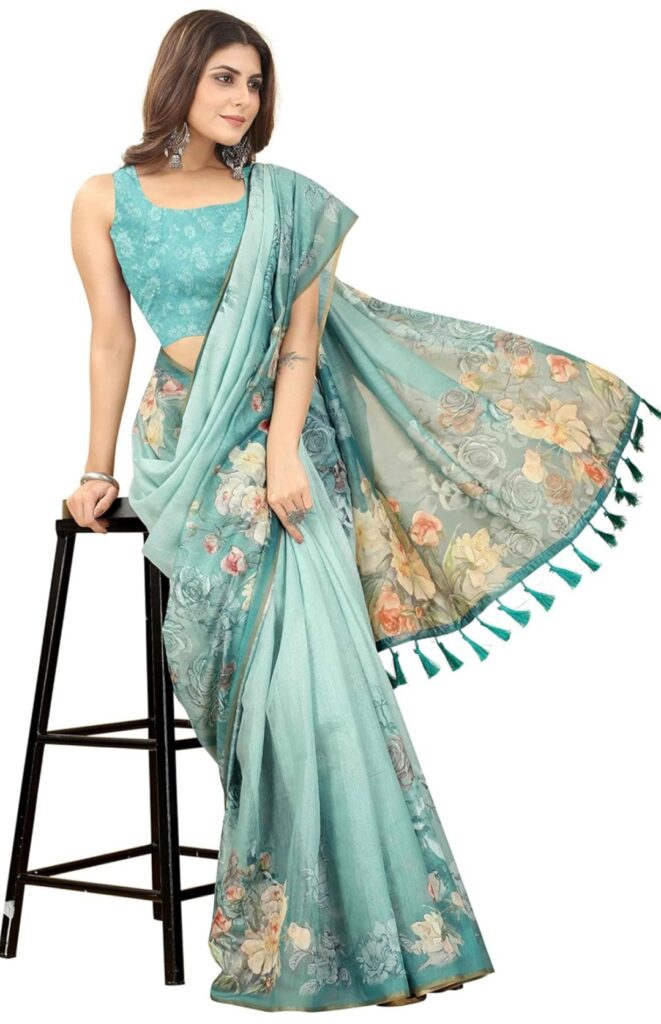
Pattern & Design: Chanderi sarees are lightweight and typically have delicate floral patterns, peacock motifs, and geometric designs. They are known for their transparency, which adds to their elegance.
Silk Type: Made from a blend of silk and cotton, which makes them lighter and more comfortable to wear in warmer climates.
Region: Originating from Chanderi in Madhya Pradesh, these sarees are highly sought after for their light texture and glossy finish. They are often preferred for formal events and festivals.
—
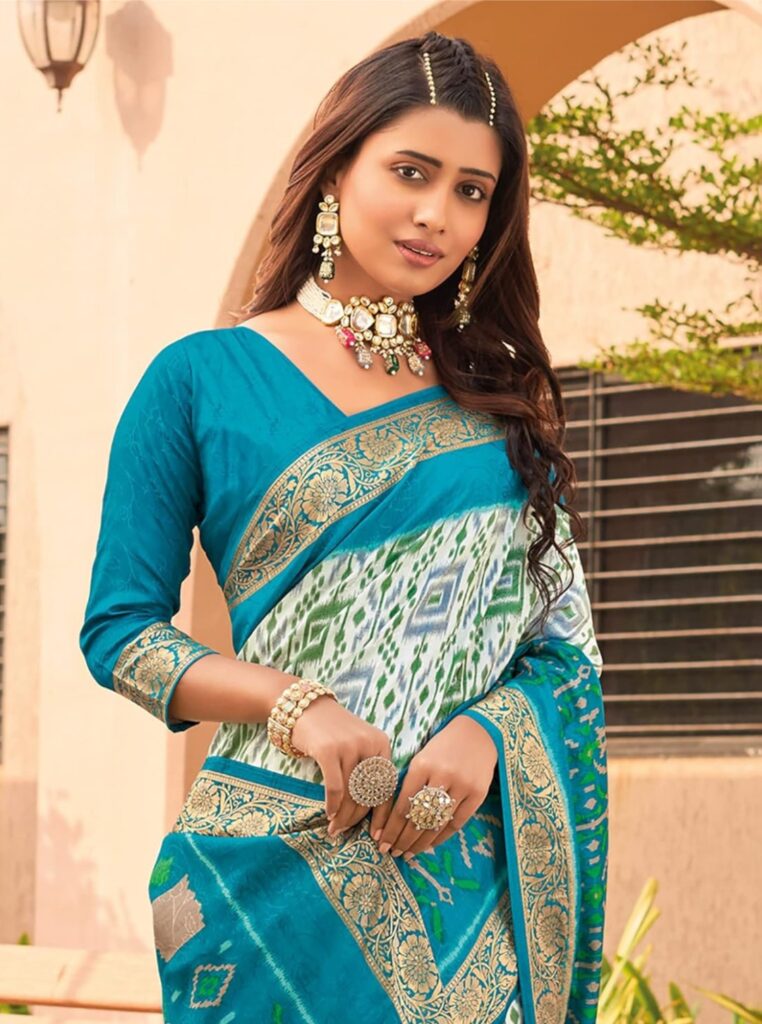
8. Pochampally Silk Sarees (Telangana)
Pattern & Design: Known for their ikat style of dyeing, Pochampally sarees feature intricate patterns that include diamonds, geometric shapes, and floral motifs. The colors are usually bright and vibrant.
Silk Type: Woven from fine silk and cotton, with an ikat technique that involves resist dyeing of the yarn.
Region: These sarees come from the town of Pochampally in Telangana, renowned for their ikat dyeing process and intricate designs. They are popular both in India and abroad.
—
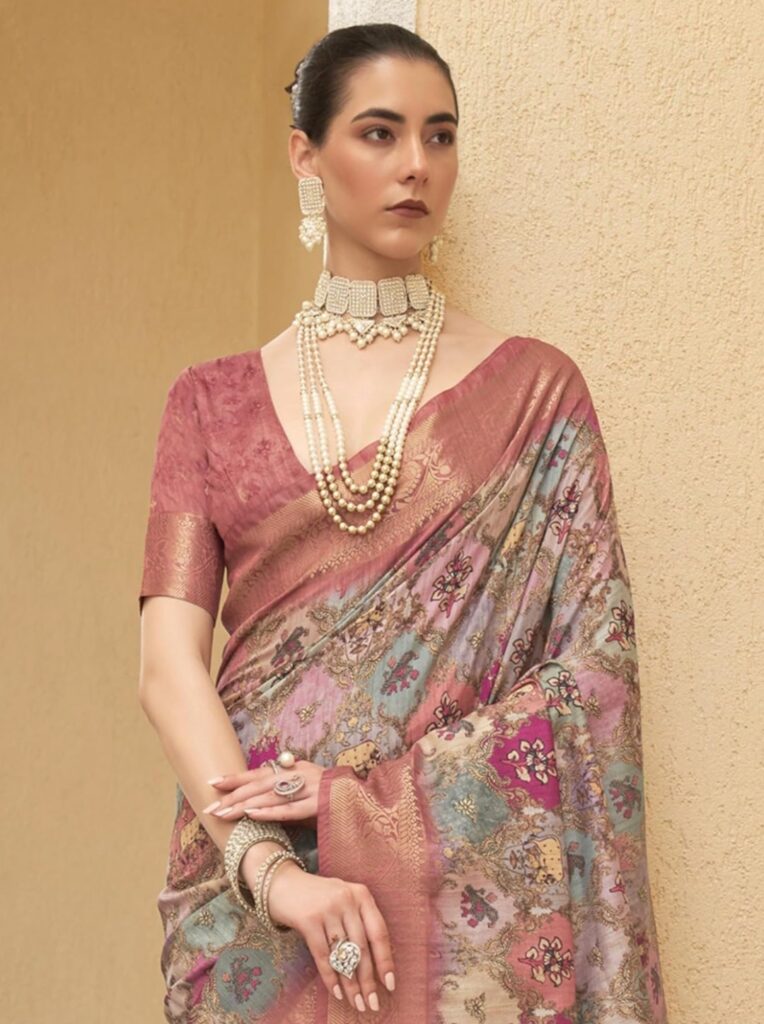
9. Tussar Silk Sarees (Jharkhand and Bihar)
Pattern & Design: Tussar silk sarees have a subtle shine and are known for their earthy, golden hues. The motifs usually feature nature-inspired elements, like leaves, flowers, and tribal designs.
Silk Type: Tussar silk, also known as ‘wild silk’, is produced from silkworms found in wild forests.
Region: Produced mainly in Jharkhand and Bihar, Tussar silk is highly eco-friendly and often woven by tribal communities, making these sarees an important cultural product of Eastern India.
—
Sarees are more than just clothing; they are a symbol of India’s rich cultural diversity, a showcase of artisanship, and an embodiment of tradition passed down through generations. The myriad of sarees across India ,each with its unique silk, pattern, and heritage, highlights the regional pride and age-old techniques of Indian weavers. Whether it’s a grand Banarasi silk saree from the north or a luxurious Kanjeevaram from the south, sarees remain an essential part of Indian identity and elegance.